What does AI with governance mean, and why does it matter to you?
7 July 2026
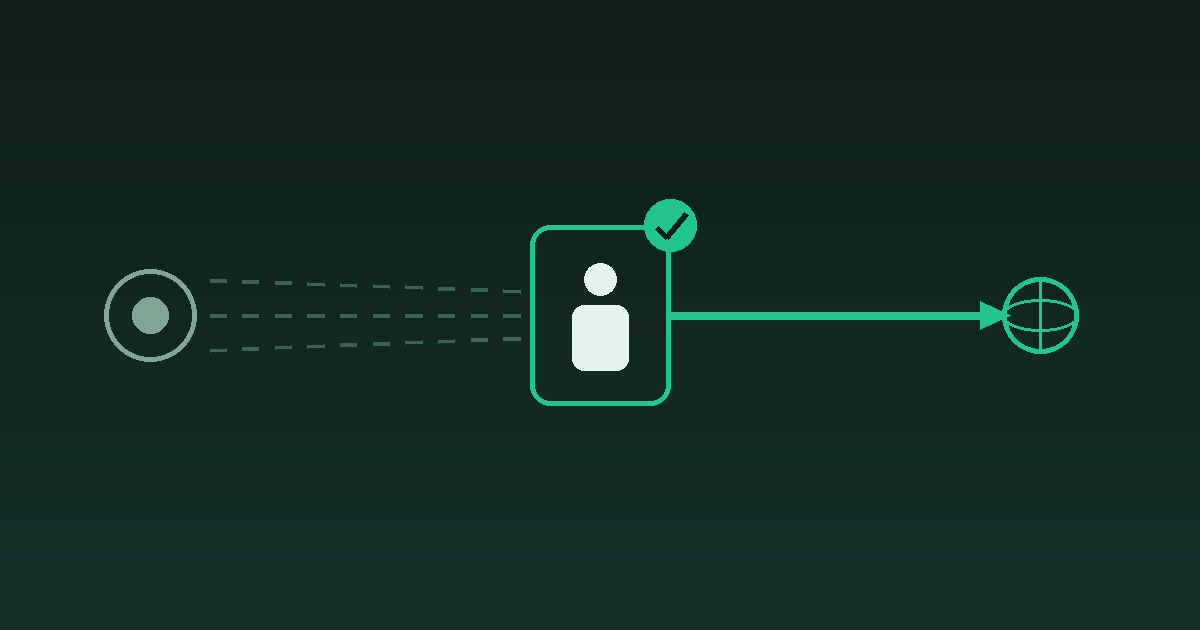
Straight answer: governance in AI is concrete, not a buzzword. It means the agent proposes and a person approves what's irreversible, each agent has exact permissions, its usage is measured, and success is validated in writing before you build. These are the four controls that keep an agent from becoming a risk in your operation.
"AI with governance" sounds like a slogan, but underneath it are four practical controls. Without them, an agent is a brilliant intern with the keys to everything and no supervision. With them, it's a reliable team member. Here's what to demand before you let an agent loose.
Control 1: the agent proposes, a person approves
This is human-in-the-loop, in plain terms: the agent prepares the action, a person approves before it goes out into the real world. The agent drafts the reply to the customer, the human sends it. The agent prepares the change, the human publishes it.
The dividing line is reversibility. Everything reversible (drafting, organising, analysing, preparing) can be automated up front. The irreversible (send, pay, delete, publish) goes through a person until the agent has earned trust on that specific task. It's not distrust of the technology; it's the same standard you'd apply to a new hire.
Control 2: permissions per agent
Each agent should be able to touch only what its job requires, and nothing more. The agent that answers customer questions doesn't need access to payroll. The one that drafts posts doesn't need to move money. Narrow, explicit permissions turn a potential incident into a non-event: even if an agent errs, it can only err inside its box.
Control 3: measured usage
Tokens (what the AI provider charges for usage) are the main recurring cost of running agents, and they grow quietly if no one looks. Governance means measuring consumption per agent and per task, like any operating cost. A usage dashboard tells you which agent earns its keep and which one burns money. And an agent with context (a company brain) spends less, because it doesn't repeat work it has already done.
Control 4: success validated in writing
Before building, agree on paper what "it works" means: the metric, the threshold, how it's measured. This does two things. It stops the goalposts moving after the fact, and it gives you an objective basis to decide whether to scale or stop. If a provider won't define success in writing, that's a signal worth reading.
Does governance slow AI down?
At first it adds a step, approving. But it avoids the far bigger cost of undoing errors in production. And it isn't static: when an agent shows judgement on a task for weeks, you widen its autonomy on that specific task. Trust is earned with a track record, exactly like with people. Governance isn't a brake; it's the seatbelt that lets you drive faster with confidence.
What to demand from a provider
- The success metric, agreed before building.
- The exact permissions of each agent: what it can and can't touch.
- Who is accountable if the agent gets it wrong.
- A path to autonomy: how an agent earns more independence over time, and within what limits.
Frequently asked
Doesn't governance slow AI down? It adds an approval step at first, but avoids the cost of undoing errors. As an agent proves itself, its autonomy widens.
What is human-in-the-loop? The agent proposes and a person approves before an action goes live. Reversible work is automated; the irreversible goes through a person.
How do I control what an agent spends? Measure it per agent and per task. A brain lowers spend by avoiding repeated work; a dashboard shows you what performs.
What should I demand in writing? The success metric, each agent's permissions, and who's accountable if it errs.
Can an agent run 100% alone? On tight, reversible tasks with a track record, yes. On money, customers or sensitive data, gradual autonomy is the healthy answer.
The honest next step
Governance is what separates AI that helps from AI that becomes a liability. Book a free diagnostic: 30 minutes, and we'll show you where an agent could help and what controls it would need, whether we work together or not.
Want AI that helps without becoming a risk?
Book a free diagnostic: 30 minutes with the founder and a report with your 3 priorities. Free and no commitment.
Book your free diagnostic