What is a company brain, and why do your AI agents need one?
7 July 2026
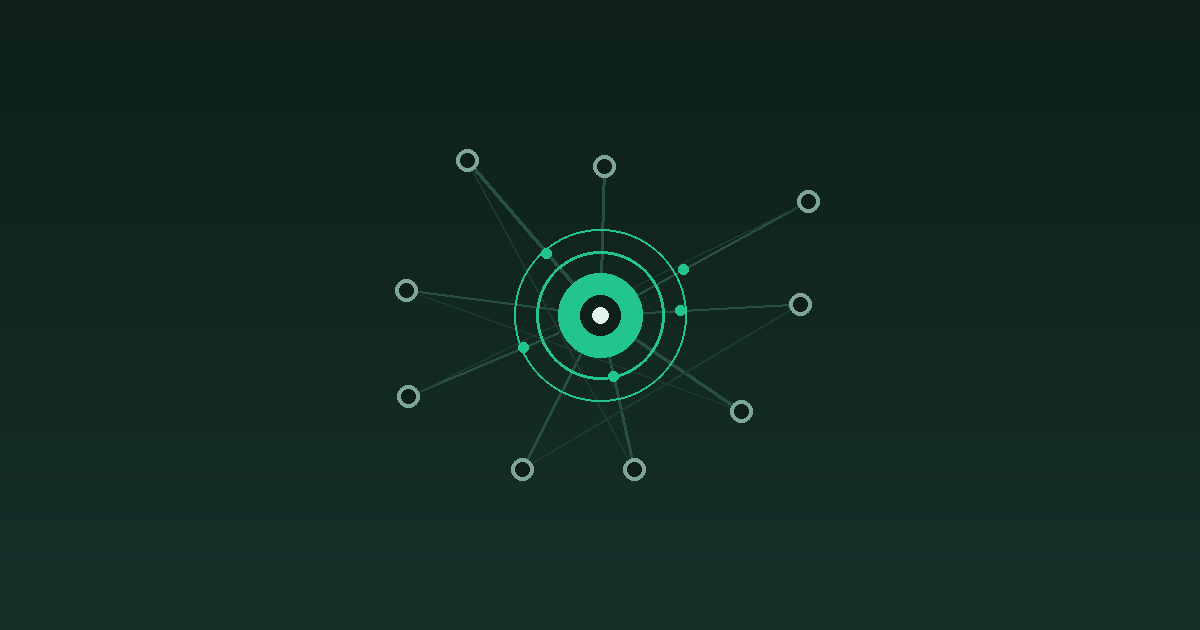
Straight answer: a company brain is a memory layer (technically, a RAG) that gives your AI agents your business's real context: your decisions, your data, your processes, your history. Without a brain, an agent guesses, and we call that hallucinating. With a brain, it learns, gets it right more often and spends less each month. It's the difference between spending on AI and building an asset.
If you've tried AI in your company and it let you down (generic answers, invented data, the feeling of explaining everything from scratch every time), the problem is almost never the model. It's that you asked for judgement from something with no memory. This post explains the missing layer, in plain terms.
Why do AI agents hallucinate?
An AI model knows a great deal about the world and nothing about your company. It doesn't know your prices, your clients, how you quote, what you promised last week. When you ask it something that needs that context, it has two options: say "I don't know" or fill the gap with something plausible. Models are trained to be helpful, so they fill. That's a hallucination: not a rare bug, but the expected outcome when context is missing.
The analogy we use: an agent with no memory is like hiring a brilliant person who shows up every morning with total amnesia. They can reason beautifully, but every day you explain again who you are, what you sell and what you agreed yesterday. And when you don't explain, they invent. No one would hire that person, yet it's exactly how most companies use AI today.
What exactly is a company brain?
It's a living knowledge base where what your company knows and decides is recorded: project status, decisions with their reasons, learnings, client data, key documents. AI agents consult it before answering or acting, and feed it when something relevant happens. Technically it's a RAG (retrieval augmented generation): information is stored so the AI can search by meaning, not just by exact word.
Three properties set it apart from "uploading documents to a chat":
- It's permanent. What one agent learns today, any agent knows tomorrow. Knowledge accumulates instead of evaporating when the conversation closes.
- It's shared. All your agents (and your team) read and write over the same memory. No more "I explained that to the other bot".
- It's yours. It lives in your perimeter, in a database you administer. If you switch AI model or provider tomorrow, the memory stays with you.
What does it look like in practice?
We'll tell it through our own case, because Sania has run on its brain from day one (this partnership is a human and an AI working side by side, and without shared memory it would be impossible). In practice it looks like this:
- At the start of any work session, the agent consults the brain and already knows the status of each project, what was decided and why. Zero re-explaining.
- When something important is closed (a decision, a learning, a milestone), it's written to the brain with date, context and priority. Ten seconds that save hours.
- When a new fact replaces an old one, the old record is superseded: the memory corrects itself instead of piling up junk.
- Any new agent we add starts with years of context from minute one, instead of starting from zero.
For a client it's the same: their brain holds their catalogue, their business rules, their solved cases, their key conversations. And their agents (the one that quotes, the one that answers customers, the one that reports) all consult the same source of truth.
What changes in practice?
| Without a brain | With a brain |
|---|---|
| The agent guesses when it lacks context | The agent consults and cites the internal source |
| Every conversation starts from zero | Every conversation starts from everything before it |
| Tokens are spent re-explaining and reprocessing | Spend drops because work isn't repeated |
| Every new agent is a project from scratch | Every new agent inherits the memory: cheaper and more accurate |
| Knowledge lives in people's heads | Knowledge is a company asset |
The economic effect surprises people most: tokens (what the AI provider charges for usage) are the main recurring cost of running agents, and an agent with no context spends several times more because it overprocesses and repeats work. The brain pays for itself on that side alone, before counting the rework avoided.
Why does almost no one offer it?
Because selling a chatbot is fast and selling memory requires understanding the client's business. Most of the market sells muscle (an agent that does X) with no memory, and the result is the wave of disappointment you already know: spectacular demos, mediocre production. Our stance is the opposite, and we write it on the home page: memory before muscle. First the layer that makes everything else work, then whatever agents you want.
How is it scoped?
At Sania the company brain is a one-off, scoped and quoted to your case (a basic or full tier), implemented inside your perimeter and with your team trained to run it. The full ranges of implementing AI, with what makes it more and less expensive, are in this article on cost.
Frequently asked
Is it the same as uploading my documents to ChatGPT? No. That's context for one conversation: it's lost when you close it and your other agents don't share it. The brain is permanent, shared and governed.
Where does my data live? In your perimeter, in a database you administer with your keys. If the memory lives on the provider's platform and you can't take it with you, that's lock-in, not an asset.
Do I need one if I'm just starting? Not always from day one: a first, tight flow is validated without a brain. But with more than one agent, or agents that touch your business data, the rule is memory before muscle.
And if I change AI provider? The brain is model-independent: today a Claude agent consults it, tomorrow whatever comes next. The accumulated knowledge survives any change.
How long does it take to implement? Weeks, not months: the first useful version loads the essentials of your operation and grows with use. The perfect brain doesn't exist; the brain that learns does.
Want your agents to learn instead of guess?
Book a free diagnostic: 30 minutes with the founder and a report with your 3 priorities. Free and no commitment.
Book your free diagnostic